
The book
Every Delay Means a Life: Ending 1 of 4
One struggle for dignity. Four possible endings. This edition contains Ending 1.
The novella · Ending 1 of 4
Every Delay Means a Life: Ending 1 of 4
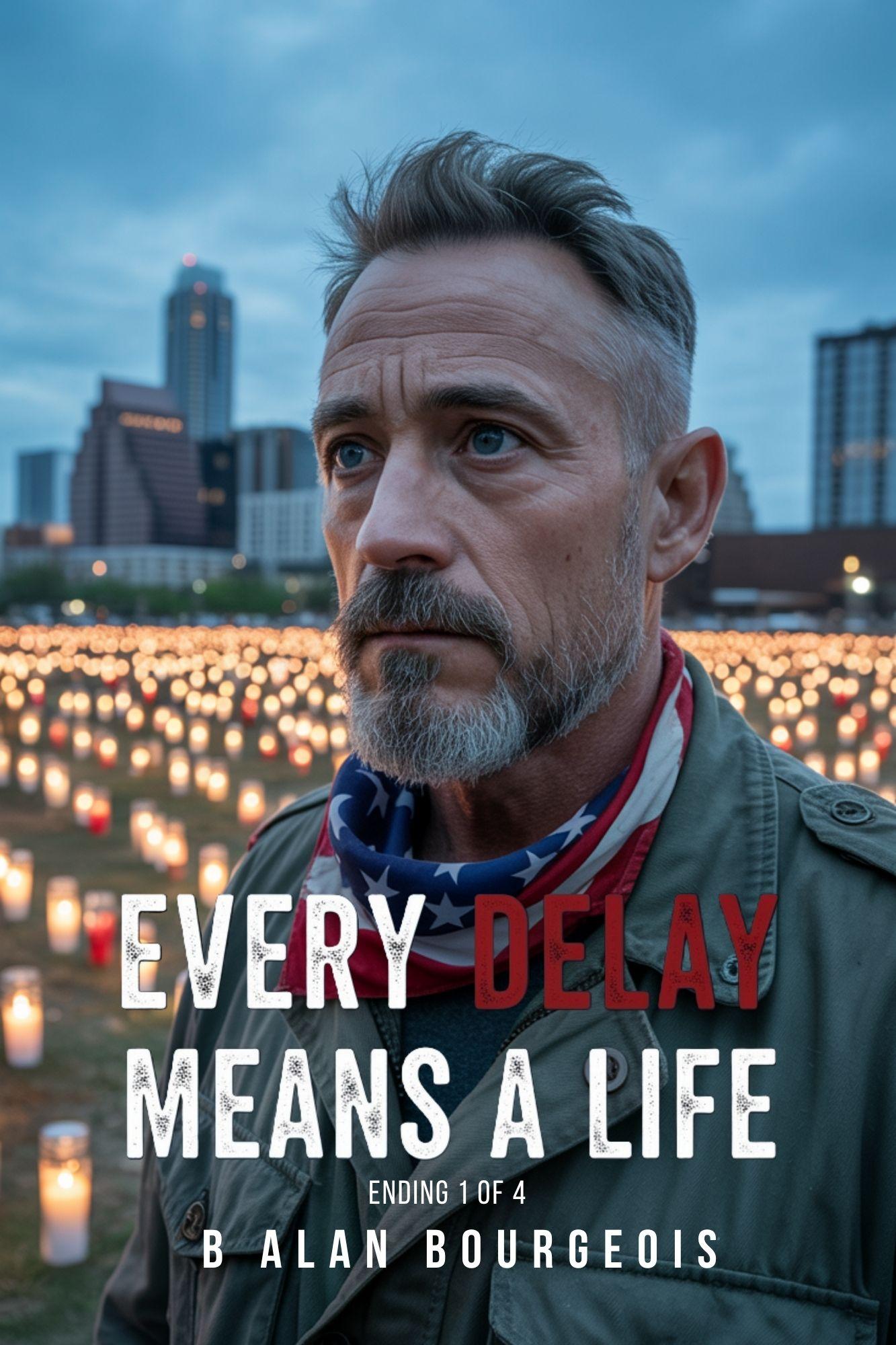
By B Alan Bourgeois
Tom Grady is a retired Army veteran sleeping in his car—unseen by the city’s ‘counts,’ and one tow away from losing the last thing that still feels like home.
Read the full book descriptionShow less
When he demands a simple, humane policy—safe parking where people won’t be criminalized for closing their eyes—he’s shoved into the city’s favorite weapons: boilerplate empathy, ‘partner agencies,’ liability talk, and endless waiting.
But Tom doesn’t stay invisible. He steps up at a City Hall testimony night and forces the room to hear what the system keeps pretending is ‘theory’: real bodies, real exhaustion, real danger—right now.
Written from lived experience—the author was homeless while writing it—this is a tense, human, unflinching story about how quickly a bureaucracy can become lethal… and what happens when one man decides to make the city count its ghosts.
Every Delay Means a Life follows Tom Grady, a homeless veteran living in his car in Austin, as he attempts something both modest and revolutionary: creating a safe-parking ‘rectangle’ where vehicle sleepers can rest without being chased—lights off inside, bathrooms open, no-questions intake, and a strict commitment to boring order. The city’s response is predictable in the worst way: delay, liability language, and a looming ordinance that reframes compassion as ‘unlawful facilitation’ and targets even the ‘appearance of order.’ The novella reads like a civic thriller powered by realism. Tom’s discipline and restraint anchor the story, while key allies—an inside-the-system staffer, a reporter treating witness as duty, and a lawman navigating conscience versus policy—turn survival into strategy. The prose is lean and precise, the tension built from meetings, memos, edited narratives, and the constant threat that visibility will be punished. It’s a tough, humane book that refuses pity and insists on accountability, showing how quickly ‘process’ becomes a weapon when rest is treated as a privilege instead of a need. – True Voice Review